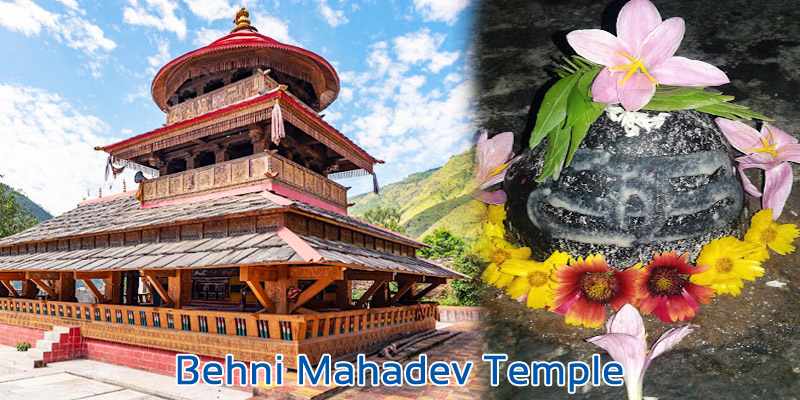
Nestled in the serene landscapes of the Kullu Valley, the Behna-Mahadev Temple stands as one of the most revered religious sites in Himachal Pradesh. Dedicated to Lord Shiva, this ancient temple is renowned for its exquisite wooden architecture, intricate carvings, and a rare brass mask of Mahadev, making it a must-visit destination for pilgrims, history enthusiasts, and architecture lovers alike.
Architectural Grandeur
The Behna-Mahadev Temple is celebrated as one of the largest gable-roofed temples in the Satluj Valley, showcasing a remarkable fusion of Himachali and North Indian temple architecture. Key architectural highlights include:
- Gable Roof & Mandapa: The temple features a steeply pitched timber-and-slate roof, a distinctive feature of Himalayan temples, designed to withstand heavy snowfall. The mandapa (pillared hall) is adorned with beautifully carved cedarwood pillars, depicting mythological motifs and floral patterns.
- Balconies & Superstructure: Rising above the sanctum is a two-tiered open balcony with elaborate woodwork. The upper balcony is crowned by a conical timber roof topped with a kalasha (metallic finial), symbolizing divinity.
- Stone Sculptures: Flanking the entrance are 8th-9th century stone idols of Lord Vishnu and Goddess Lakshmi, indicating the temple’s historical evolution under different dynasties.
- Sanctum & Sacred Mask: The garbhagriha (sanctum sanctorum) houses a 12th-13th century brass mask of Lord Shiva, used to adorn the deity during rituals. This rare artifact reflects the region’s rich metalcraft traditions.
Historical & Religious Significance
- The temple’s origins trace back to the medieval period, with influences from the Katoch dynasty and later Pahari architectural styles.
- It serves as a vital pilgrimage site, especially during Maha Shivaratri, when devotees throng to seek blessings.
- The presence of Vishnu-Lakshmi sculptures suggests a syncretic worship tradition, where Shaivism and Vaishnavism coexisted.
Visitor Experience & Accessibility
- Location & Trek: Situated near Kangra, the temple is easily accessible by road, with a short walk leading to its entrance.
- Best Time to Visit: March-June (pleasant weather) and September-November (post-monsoon clarity). Winters offer a snowy charm but may have restricted access.
- Nearby Attractions: Combine your visit with trips to Kangra Fort, Masroor Rock Cut Temple, and Jwalamukhi Temple.
Why Visit Behna-Mahadev Temple?
- Witness a masterpiece of Himalayan woodwork with intricate carvings.
- Experience the spiritual aura of an ancient Shiva shrine with a unique brass mask tradition.
- Explore the historical confluence of art and devotion in the Kangra Valley.
A visit to Behna-Mahadev Temple is not just a religious journey but also a step back into the architectural and cultural legacy of Himachal Pradesh.